Guide, Knee
Why your knee hurts on the way down
Stairs down, downhill running and the lowering part of a squat load the kneecap the most. Here is why, and what to do about it.
- Reading time
- 6 minutes
- Level
- Beginner
- Useful for
- RunningHiking

If your knee is fine on the way up a hill and sore on the way down, you are not imagining it. Going down is where the knee takes the most load, and it is where an irritated kneecap joint usually complains first.
What is actually going on
When you walk or run downhill, your quadriceps work while they lengthen to control your body weight. This braking action presses the kneecap firmly into the groove at the end of your thigh bone. Going down stairs can put several times your body weight through that small joint, and the steeper and faster you go, the higher it climbs.
Pain here rarely means damage. Far more often, the joint has become sensitive because the load on it went up faster than it could adapt: a new hill block, a hiking holiday or a jump in weekly kilometres.
What helps in the first two weeks
- Keep moving, but take the edge off: shorter downhill sections, smaller steps on stairs and a handrail when you need it.
- Use pain as your guide. Up to 3 out of 10 during activity is fine if it settles by the next morning.
- Swap long descents for flat or uphill sessions for now.
- Avoid long periods of sitting with the knee fully bent.
What builds it back
The long-term fix is strength. Stronger quadriceps and hips share the braking load and make the kneecap joint less sensitive. Two exercises do most of the work:
- Spanish squat holds load the quadriceps without irritating the joint.
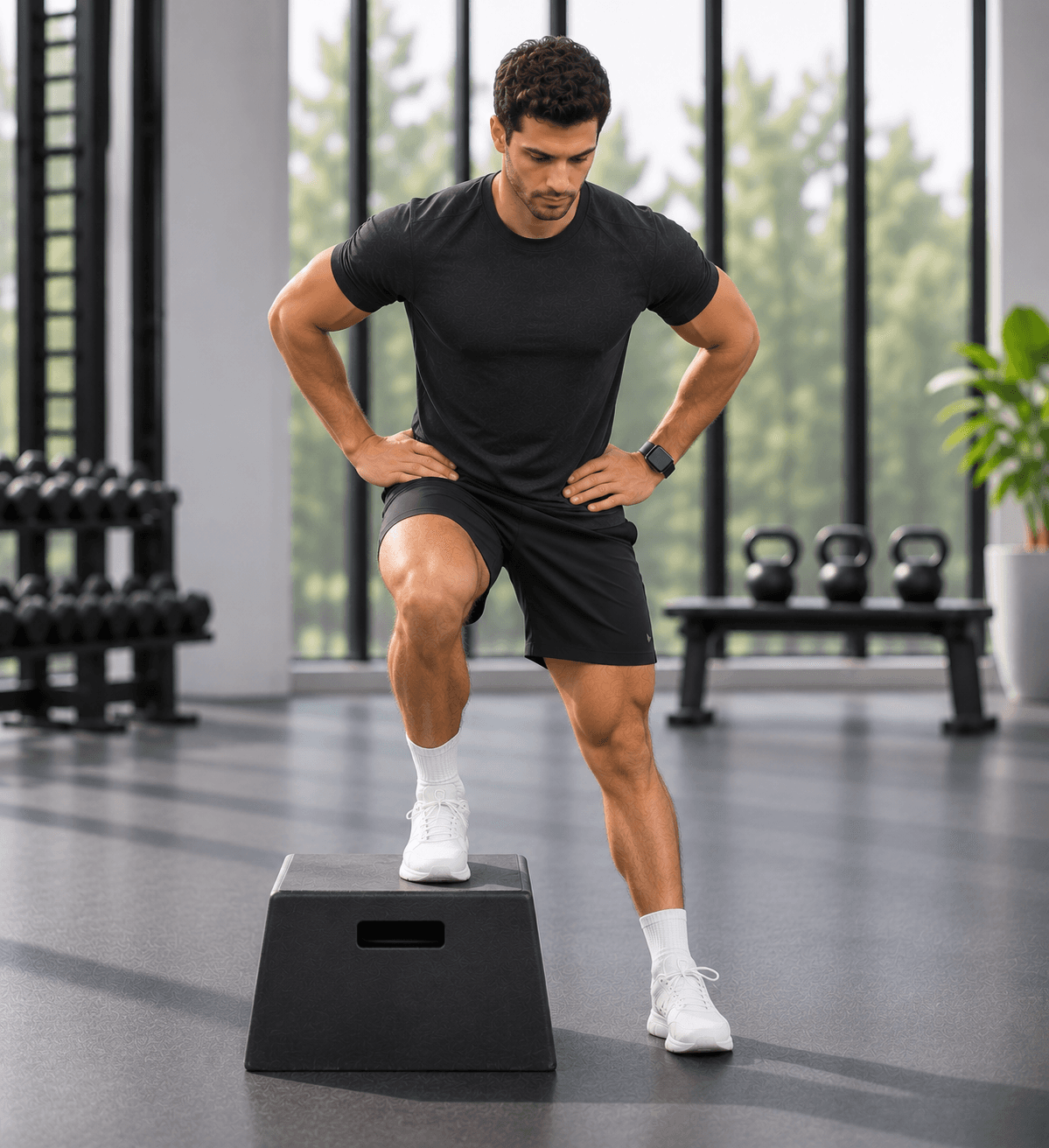
- Lateral step-downs train control exactly where it hurts, on the way down.
Most runners feel a clear difference within four to six weeks of doing these two or three times a week.
When to get it checked
Book an assessment if the knee swells, locks or gives way, if pain wakes you at night, or if it has not improved after three weeks of easing off. Those signs point to something other than an irritated kneecap joint.